
Multi-Layered Monitoring for LN2 Tanks Storing Reproductive Tissue
How ReproTech built a redundant, multi-layered LN2 monitoring system to protect irreplaceable reproductive tissue — even when the internet goes down.
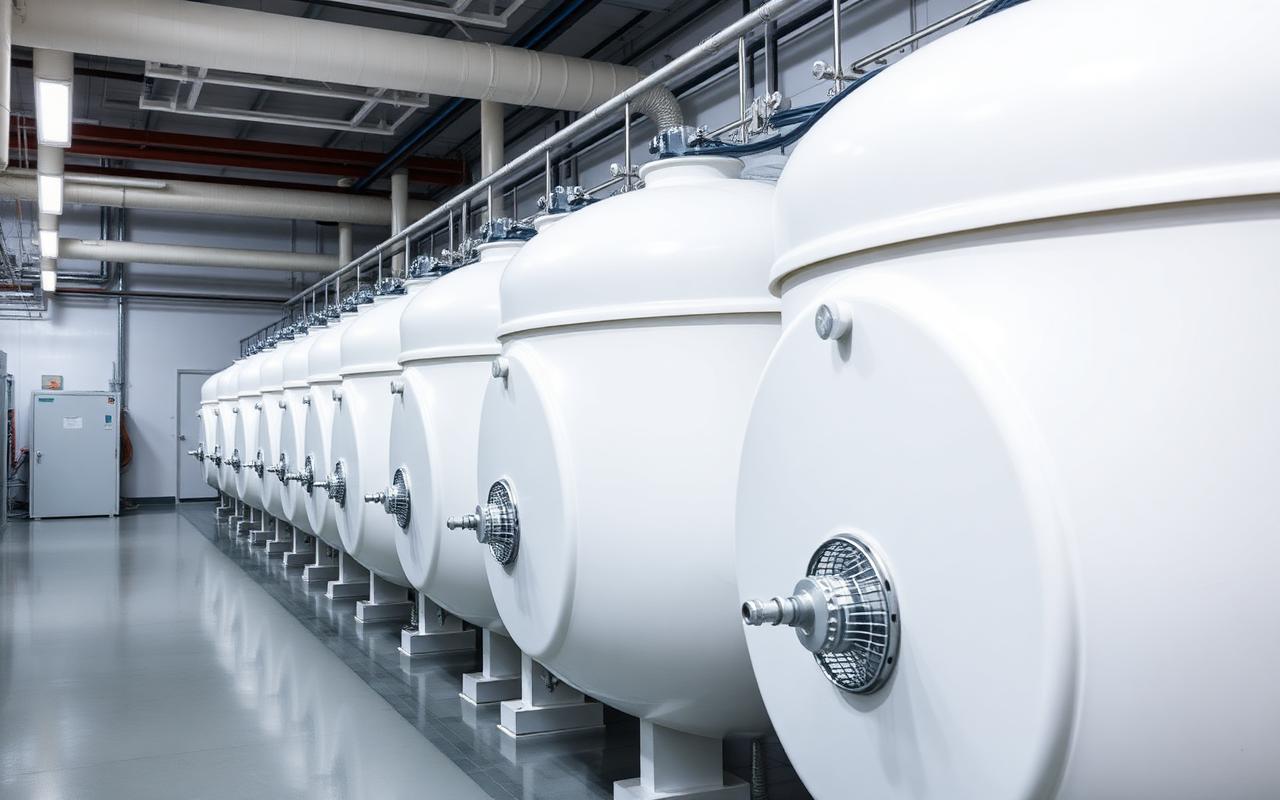
How ReproTech built a redundant, multi-layered LN2 monitoring system to protect irreplaceable reproductive tissue — even when the internet goes down.
ReproTech is a long-term cryostorage facility for reproductive tissue received from IVF centers and oncologists. The samples they protect are, by definition, irreplaceable — which is why the team went well beyond a single monitoring system to safeguard every LN2 tank in their facility.
The challenge: a single point of failure is not an option
ReproTech already had an internet-based monitoring system in place to alert staff to temperature fluctuations in their LN2 storage tanks. But for storage this sensitive, one system is not enough. The team wanted a fully redundant safety net that could function even if their primary network went offline.
“If our internet were to go down, we wanted something additional in place with the ability to alert us in a different way.”
Specifically, they wanted a cellular-based level alarm probe monitoring system — one that could notify staff of low nitrogen levels based on the probe's physical touch, independent of the building's internet connection.
Why ReproTech chose CORIS
After evaluating several competing systems, the ReproTech team selected CORIS as the foundation of their multi-layered monitoring architecture. CORIS delivered exactly what they needed:
- A cellular-based alerting path that operates independently of the facility's internet connection
- Level alarm probe monitoring that triggers on physical low-LN2 conditions inside the tank
- A redundant safety net that runs alongside their existing internet-based temperature monitoring
- A unified view of every tank across both monitoring layers
The result: full transparency, defense in depth
With CORIS in place, ReproTech now operates a true defense-in-depth monitoring program. Temperature excursions are caught by the primary internet-based system, and low-nitrogen events are caught by the cellular-based level probe — so a failure of any single network, sensor, or system never becomes a failure to alert.
For a facility entrusted with irreplaceable reproductive tissue, that layered visibility is not a nice-to-have. It is the standard of care.
See how CORIS can protect what matters to you.
Talk to our team about a deployment tailored to your environment.